computertipsguru@gmail.com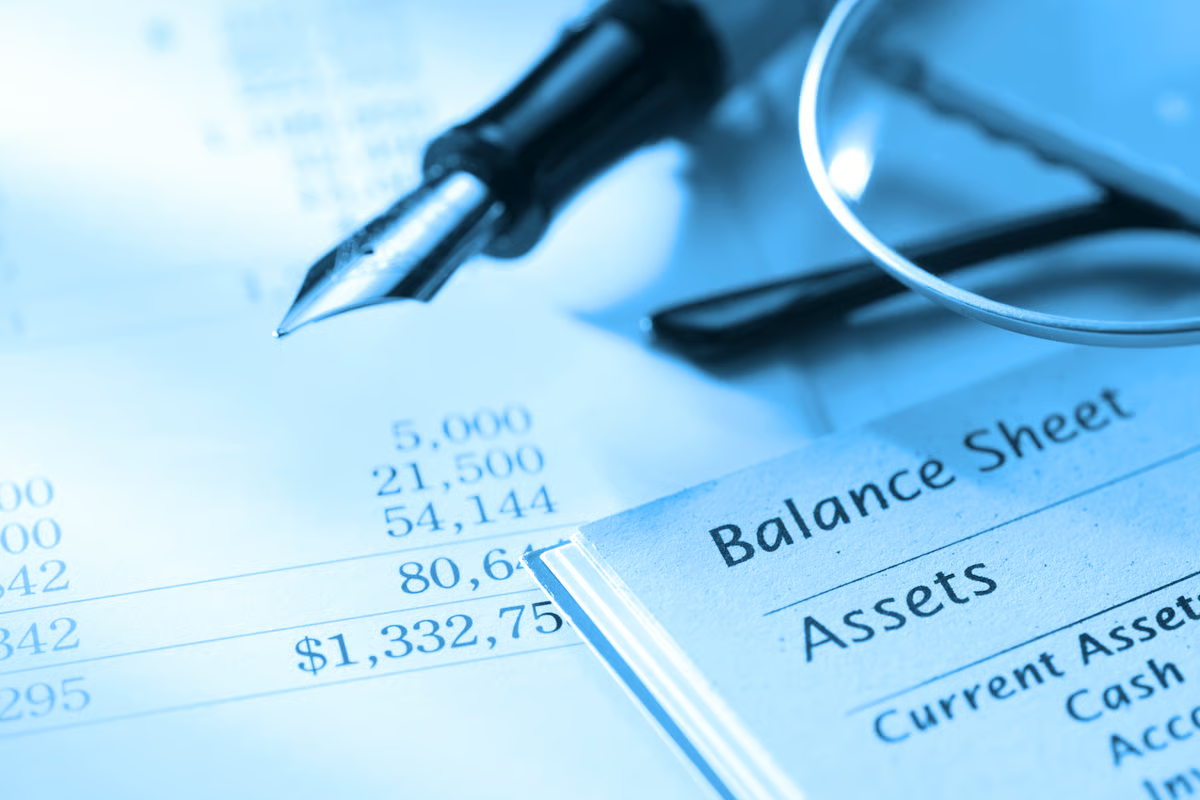
The first time someone handed me a balance sheet, I nodded along and understood almost nothing. It looked like a wall of numbers with no story attached. Once someone actually walked me through it, it clicked — and honestly, it’s simpler than it looks once you know what you’re looking at.
What a Balance Sheet Actually Shows
Quick answer: A balance sheet is a snapshot of what a business owns (assets), what it owes (liabilities), and what’s left over for the owner (equity) at a specific point in time — not over a period, unlike a profit and loss statement.
That “snapshot” detail matters. It’s not showing performance over months, it’s showing where things stand on one specific date.
Related voice: Tax Deductions Every Small Business Owner Should Know · Content Marketing Strategy for Small Businesses in 2026 · SEO vs Paid Ads: Which Digital Marketing Strategy Works Better?
The Basic Formula Behind Every Balance Sheet
Everything on a balance sheet follows one simple equation:
Assets = Liabilities + Equity
If this doesn’t balance, something’s wrong in the bookkeeping. This single formula is the reason it’s called a “balance” sheet in the first place.
Related voice: Corporate Social Responsibility: Why It Matters for Modern Businesses · Sales Funnel Explained: How to Turn Leads Into Customers
Understanding Assets
Assets are everything the business owns that has value. These split into two categories:
- Current assets: cash, inventory, accounts receivable — things convertible to cash within a year
- Fixed assets: equipment, property, long-term investments — things held longer term
I’ve noticed small business owners often overlook accounts receivable as an asset, forgetting that money owed to them by customers still counts, even if it’s not yet in the bank.
Understanding Liabilities
Quick answer: Liabilities represent everything the business owes to others, split into current liabilities (due within a year, like short-term loans or unpaid bills) and long-term liabilities (like a business loan due in five years).
Don’t panic if liabilities look large — what matters is the relationship between liabilities and assets, not the raw number alone.
Understanding Equity
Equity is essentially what’s left for the owner after subtracting liabilities from assets. For a small business, this might just be the owner’s original investment plus retained profits. For a larger company, this includes shareholder investments and retained earnings.
[link to related guide on tax deductions for small business owners here]
Reading a Balance Sheet: A Practical Example
Picture a small retail shop with ₹10 lakh in inventory and cash (current assets), ₹5 lakh in a business loan (liability), and ₹5 lakh in owner equity. That’s a balanced, reasonably healthy sheet — assets fully covered by a mix of debt and owner investment, without excessive leverage.
Now compare that to a shop with ₹10 lakh in assets but ₹9 lakh in liabilities. Same asset size, very different risk profile.
Key Ratios You Can Pull From a Balance Sheet
Once you understand the basic layout, a few quick calculations tell you a lot:
- Current ratio (current assets ÷ current liabilities) — measures short-term financial health
- Debt-to-equity ratio (total liabilities ÷ equity) — measures how leveraged the business is
- Working capital (current assets minus current liabilities) — shows available operating cash
A current ratio below 1 is often a warning sign — it means short-term obligations exceed short-term assets.
Frequently Asked Questions
What’s the difference between a balance sheet and a profit and loss statement? A balance sheet is a snapshot at one point in time; a profit and loss statement shows performance (income and expenses) over a period, like a month or year.
Why do assets always equal liabilities plus equity? Because every asset a business has was funded either by debt (liabilities) or owner investment and profits (equity) — there’s no third source.
What’s considered a current asset versus a fixed asset? Current assets convert to cash within a year (like inventory or receivables); fixed assets are longer-term holdings like equipment or property.
Is a high liability amount always bad for a business? Not necessarily — it depends on the ratio to assets and equity, and whether the debt is funding productive growth versus just covering losses.
Do small businesses need a formal balance sheet? Yes, even simple ones benefit from tracking this regularly, especially when applying for loans or bringing on investors.
How often should a balance sheet be updated? Most businesses update it monthly or quarterly, though it can technically be generated at any point in time from accurate bookkeeping.
Conclusion
A balance sheet isn’t as intimidating as it first looks — once you understand the core equation of assets, liabilities, and equity, the rest is just filling in categories. If you run a small business and don’t currently review this regularly, start pulling one together monthly. Even a rough version gives you a much clearer picture of your actual financial health than your bank balance alone ever will.